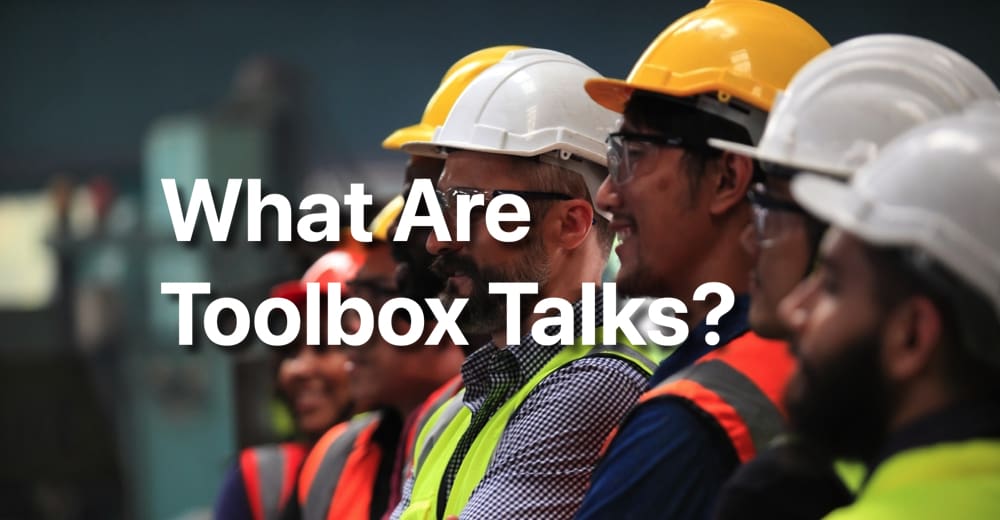
Workers don’t need another lecture on policy. They need conversations that stick—discussions rooted in real risk, real behavior, and real consequences. That’s where health toolbox talks deliver. These brief, focused sessions aren’t just compliance checkboxes. When done right, they reshape workplace culture by turning abstract safety rules into actionable awareness.
Yet too many teams treat toolbox talks as routine—the same topics, the same tone, the same disengaged audience. The result? Missed opportunities, overlooked hazards, and preventable incidents. The solution isn’t longer meetings. It’s smarter ones. This guide breaks down the most effective health-focused toolbox talk topics, how to deliver them with impact, and where most programs go wrong.
Why Health Toolbox Talks Matter Beyond Compliance
Safety isn’t just about hard hats and harnesses. Physical protection dominates traditional talks, but long-term health risks often fly under the radar—until someone gets hurt.
Consider this: According to OSHA and NIOSH data, chronic conditions like musculoskeletal disorders, hearing loss, and stress-related illnesses stem from workplace exposures that build over time. Yet these rarely trigger urgent reactions because symptoms appear slowly. A worker might not feel back pain today from poor lifting technique—but in six months, it could mean lost time and medical costs.
Health toolbox talks close that gap. They spotlight invisible threats: repetitive motion, prolonged standing, chemical exposure, mental strain. These discussions don’t just inform—they build habits. A five-minute talk on proper posture during warehouse tasks can prevent years of degeneration.
More importantly, they humanize safety. When a supervisor shares a personal story about managing fatigue on night shifts, it resonates deeper than any poster on a break room wall.
Top 8 Health Toolbox Talk Topics That Drive Real Change
Not all topics are equal. The most effective health talks focus on high-frequency, high-impact risks—those that workers face daily but rarely discuss. Here’s what actually moves the needle:
#### 1. Ergonomics in Daily Tasks Many assume ergonomics only applies to office workers. In reality, warehouse staff, technicians, and healthcare workers face constant strain from awkward postures and repetitive motions.
Use case: A manufacturing team discusses how reaching across a conveyor belt increases shoulder strain. The talk leads to repositioning tools, reducing motions by 40%.
Key points to cover: - Recognizing early signs of strain (numbness, stiffness) - Adjusting work height and tools - Taking micro-breaks every 30–60 minutes
#### 2. Hearing Protection and Noise Awareness Noise-induced hearing loss is 100% preventable—and still one of the most common occupational illnesses.
Common mistake: Workers wear earplugs incorrectly or remove them during short noisy tasks.
Effective approach: Use a sound meter app to measure decibel levels during a routine task. Show real-time data to prove when protection is non-negotiable.
#### 3. Mental Wellbeing and Stress Management Burnout, pressure, and emotional fatigue affect decision-making and reaction time—key factors in incident risk.
Realistic example: A construction crew talks about tight deadlines increasing rushed decisions. They agree on a “pause-and-check” signal any team member can use when feeling overwhelmed.
Discussion points: - Signs of stress (irritability, fatigue, forgetfulness) - How stress impacts physical safety - Normalizing conversations about mental load
#### 4. Hydration and Heat Stress Especially critical in outdoor, industrial, or high-heat environments.
Practical tip: Instead of saying “drink water,” specify “drink 8 oz every hour, even if you’re not thirsty.” Dehydration starts before thirst kicks in.
Tool: Introduce a hydration buddy system where workers monitor each other’s intake during summer months.
#### 5. Proper Lifting and Body Mechanics Back injuries account for nearly 20% of all workplace injuries, per Bureau of Labor Statistics.
Engagement strategy: Run a live demo comparing correct vs. incorrect lifting. Let workers feel the difference in muscle engagement.
Critical reminder: Feet shoulder-width, lift with legs, keep load close. And when in doubt—ask for help or use mechanical aids.
#### 6. Chemical Exposure and PPE Use Workers often underestimate low-level exposure to cleaning agents, solvents, or fumes.
Real-world gap: Someone uses gloves but forgets eye protection when handling degreasers.
Talk structure: - Review Safety Data Sheets (SDS) for common chemicals - Demonstrate correct PPE setup - Emphasize that “small spills” still require protection
#### 7. Fatigue and Shift Work Health Long shifts, rotating schedules, and poor sleep hygiene impair alertness like alcohol intoxication.
Data point: The National Sleep Foundation links working over 60 hours weekly to a 36% increase in injury risk.
Actionable takeaway: Encourage workers to self-assess using a simple 1–5 fatigue scale before starting critical tasks.
#### 8. Hand Safety Beyond Cuts While lacerations are common, many overlook vibration syndrome, skin conditions, or repetitive strain.
Example: A road crew discusses how prolonged jackhammer use leads to hand-arm vibration syndrome (HAVS). They rotate duties and inspect gloves for damping effectiveness.
How to Structure an Impactful Health Toolbox Talk
Length isn’t leverage. A seven-minute talk with engagement beats a 15-minute monologue every time.
Follow this framework:
- Hook (1 min): Start with a story, statistic, or question.
- “Did you know that 70% of lower back injuries happen during lifting—often with loads under 25 pounds?”
- Hazard Breakdown (2–3 min): Explain the health risk in plain language. Use visuals if possible—photos, diagrams, or real tools.
- Behavior Shift (2 min): Focus on one actionable change. Not “be safe,” but “pause, squat, lift with legs—every time.”

- Team Input (1–2 min): Ask: “Have you felt this strain before?” or “What’s one thing we can change tomorrow?”
- Close with Commitment (1 min): Assign a small, measurable action. “This week, let’s all do one lift checklist before handling heavy materials.”
Avoid reading from a script. Speak naturally. Let workers interrupt. The goal isn’t perfection—it’s participation.
Common Mistakes That Kill Engagement
Even with strong topics, poor delivery undermines results. Watch for these pitfalls:
- Repetition without variation: Using the same “safe lifting” talk every quarter bores teams. Rotate examples—lifting boxes, hoses, patients, or tools.
- Top-down tone: A supervisor lecturing from memory feels authoritarian. Better: co-lead with a frontline worker.
- No follow-up: Talks work best when reinforced. Mention the topic in walkarounds: “How’s the new tool placement working for your back?”
- Ignoring feedback: If workers suggest adding mental health resources, act on it. Silence kills trust.
The best programs track not just attendance, but behavior change. Did near-miss reports increase after a stress talk? Did PPE compliance rise post-chemical review?
Tailoring Health Talks to Your Industry
Generic topics fall flat. Customize based on actual workplace demands.
| Industry | High-Risk Health Exposure | Recommended Talk Focus |
|---|---|---|
| Construction | Noise, vibration, heat stress | Hearing protection rotation, hydration schedules |
| Healthcare | Musculoskeletal strain, emotional fatigue | Safe patient handling, debriefing after critical events |
| Manufacturing | Repetitive motion, chemical exposure | Micro-breaks, PPE inspection routines |
| Warehousing | Lifting, standing fatigue | Load distribution, anti-fatigue mat use |
| Utilities | Confined spaces, shift fatigue | Oxygen monitoring, fatigue self-checks |
Tailoring builds relevance. Workers see the talk as for them, not at them.
Measuring the Impact of Health Toolbox Talks
You can’t improve what you don’t measure.
Track: - Participation rates: Are people showing up consistently? - Behavioral observations: Are workers applying discussed practices? - Health incident trends: Are strain-related injuries decreasing over time? - Feedback quality: Are workers asking follow-up questions or suggesting topics?
One refinery reduced hand injuries by 52% in 18 months by tracking glove wear compliance after a series of hand health talks and adding visual reminders at tool stations.
Data turns awareness into accountability.
Final Thoughts: Make Health Personal, Not Procedural
The most effective health toolbox talks don’t feel like safety meetings. They feel like conversations workers would have off the clock—about their back pain, their sleep, their stress.
When a forklift operator shares how stretching before shift reduced his lower back stiffness, others listen. Because it’s real. Because it’s human.
Prioritize depth over frequency. One well-run, honest talk per week beats five robotic recitations. Focus on health risks that linger—the ones that don’t cause immediate harm but erode well-being over time.
Start small. Pick one topic. Invite dialogue. Follow up. Repeat.
Safety isn’t a moment. It’s a mindset. And health toolbox talks, done right, are the fastest way to build it.
FAQ
What should you look for in Essential Health Toolbox Talks Topics for Safer Workplaces? Focus on relevance, practical value, and how well the solution matches real user intent.
Is Essential Health Toolbox Talks Topics for Safer Workplaces suitable for beginners? That depends on the workflow, but a clear step-by-step approach usually makes it easier to start.
How do you compare options around Essential Health Toolbox Talks Topics for Safer Workplaces? Compare features, trust signals, limitations, pricing, and ease of implementation.
What mistakes should you avoid? Avoid generic choices, weak validation, and decisions based only on marketing claims.
What is the next best step? Shortlist the most relevant options, validate them quickly, and refine from real-world results.